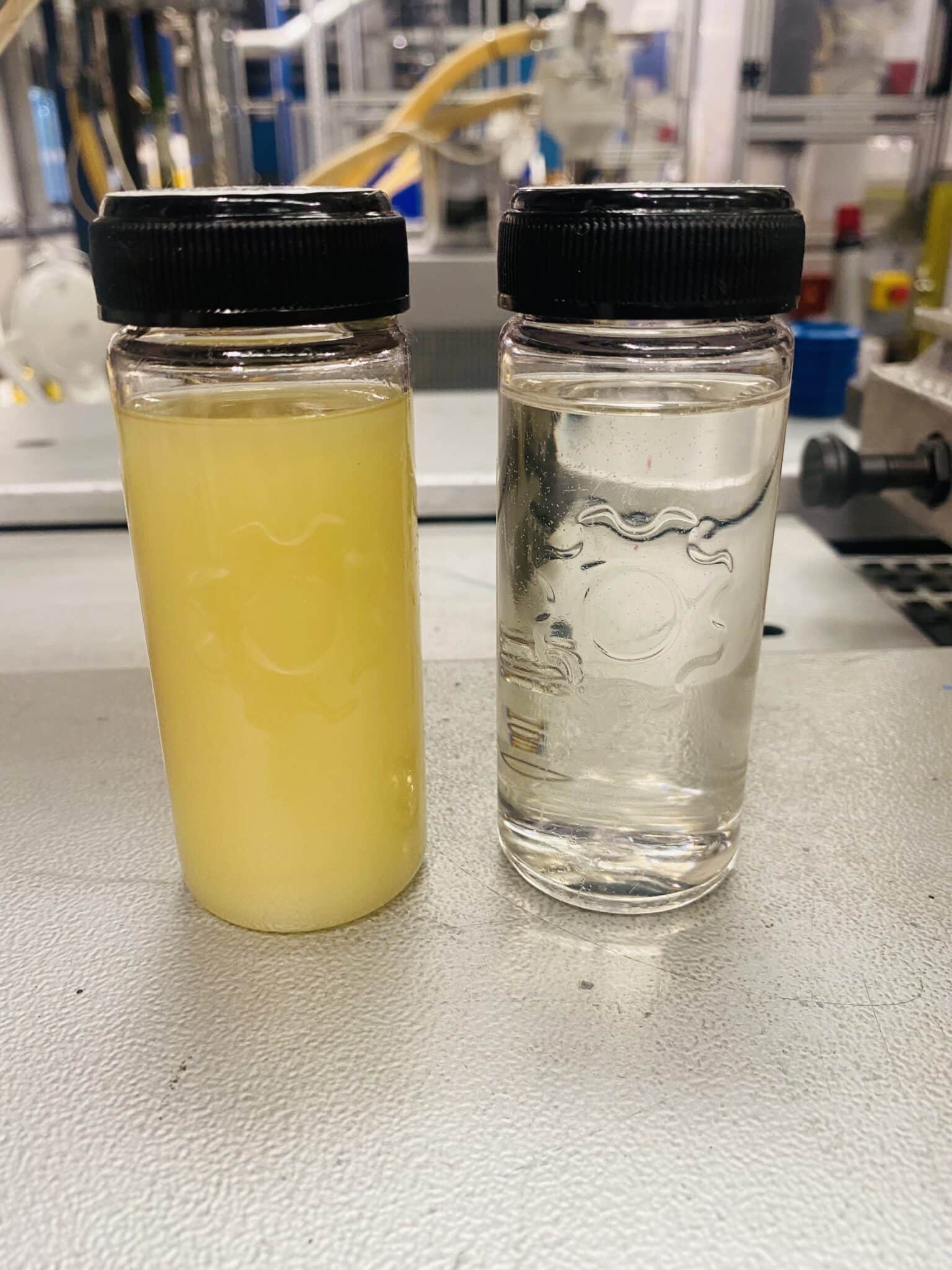
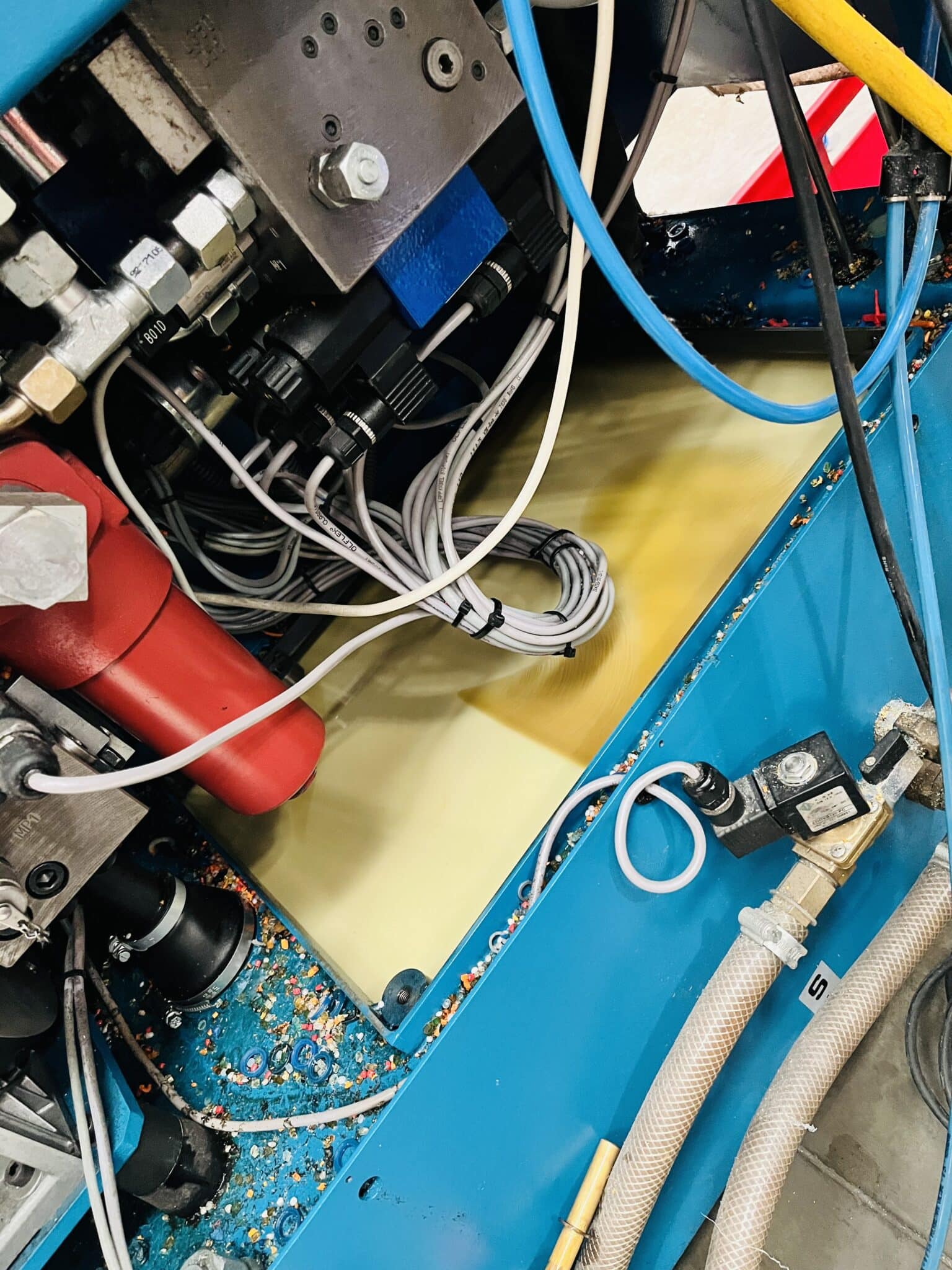
Removal of water contamination from hydraulic oil systems

Minimising downtime of your machinery

Water contamination poses a significant challenge in hydraulic systems within the plastics manufacturing industry, particularly in machinery utilised for injection and blow molding applications. These systems rely heavily on hydraulic oil to facilitate precise movements and operations, making the presence of contaminants, particularly water, a serious concern.

Removal of oil whilst machine still in operation

Removal of water from oil with filters and system flushing

Water contamination in hydraulic oil can result from various sources, including environmental exposure, condensation, or inadequate maintenance practices. Once introduced into the hydraulic system, water can lead to a myriad of issues that compromise the efficiency, reliability, and longevity of the machinery.

One of the primary problems caused by water contamination is the degradation of lubricating properties in the hydraulic oil. Water can disrupt the oil’s ability to form a protective film on metal surfaces, leading to increased friction, wear, and ultimately, component failure. This can result in costly repairs, downtime, and production losses for plastics manufacturers.

Furthermore, water contamination can promote the formation of corrosive acids within the hydraulic system. These acids can corrode metal surfaces, seals, and other critical components, further exacerbating wear and compromising the integrity of the machinery. In severe cases, corrosion-induced damage may necessitate extensive repairs or even the replacement of entire hydraulic systems, imposing significant financial burdens on manufacturers.

OMS LubriTek offers a range of solutions specifically designed to address water contamination in hydraulic oil within plastics manufacturing machinery. The selection of the most appropriate remedial solution depends on the levels of water contamination identified through oil analysis sampling.

Removal of water from oil with filters and system flushing

Conquer Water Contamination: Restore Hydraulic Performance

For mild to moderate levels of water contamination, solutions such as filtration absorption may be recommended, this would prove to be the most cost effective way of water removal from the hydraulic system as it means there is no waste oil to dispose of & oil changes would not be required.  

In cases where water contamination is more severe, a flush oil change would be beneficial & consists of the thorough cleaning of the system to remove contaminants, including water, and replenishing it with clean hydraulic oil. This process helps restore optimal operating conditions and extends the service life of the machinery. For larger systems other filtration methods vacuum dehydration may be necessary, this process utilises vacuum technology to remove water from the oil through evaporation, effectively restoring oil purity and eliminating water-related issues.

By utilising OMS LubriTek’s range of solutions for water contamination removal, plastics manufacturers can mitigate the detrimental effects of water on hydraulic systems, ensuring smooth operation, enhanced reliability, and prolonged equipment lifespan. With expert guidance and tailored recommendations based on oil analysis sampling, manufacturers can effectively address water contamination challenges and optimise their production processes.